More than just grammar and vocabulary, Italian at Kent offers an introduction that reflects language, history, geography, and culture all at once. The class, which alternates each year with Russian, gives students a chance to experience la bella lingua and the world that comes with it.
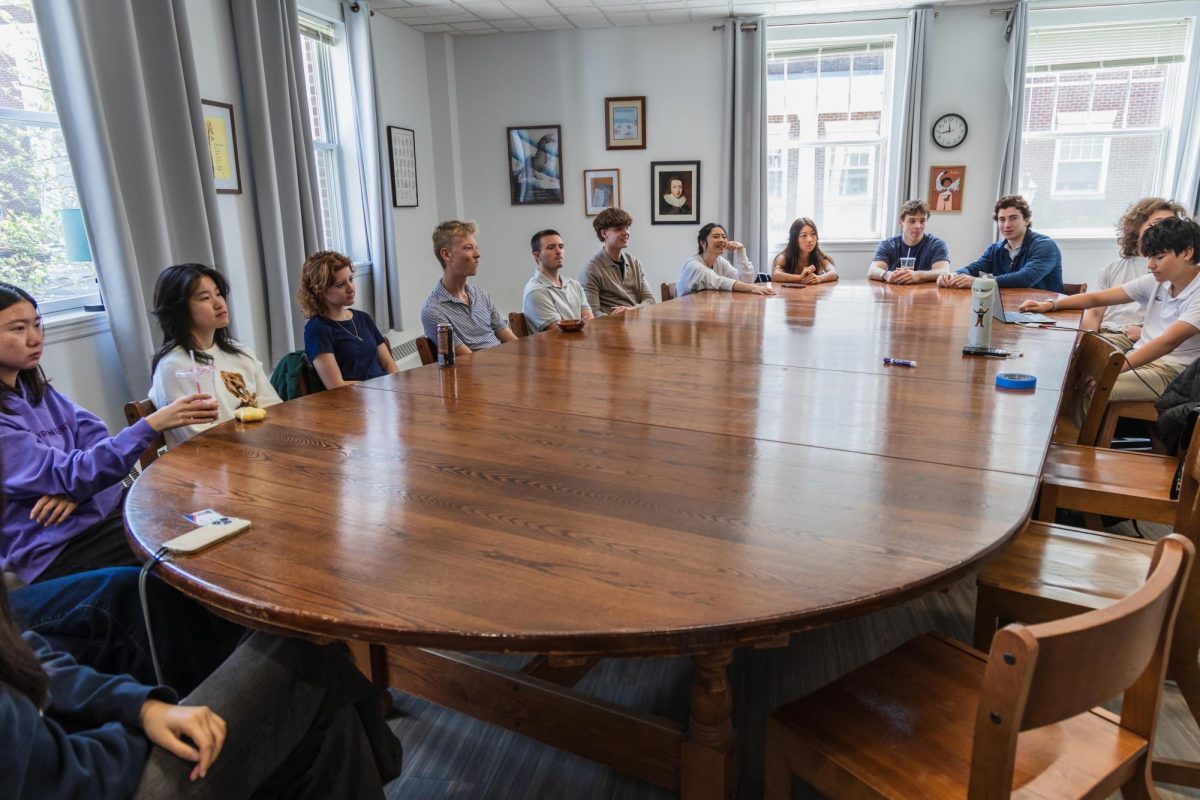
The class is small, which is part of its charm. Using the Prego! textbook, students cover everything from basic conversation and sentence structure to Italian geography, food and famous figures. The course balances the technical side of language learning with cultural understanding, making it both practical and immersive. As Ms. Benjamin, the teacher for the course this year, noted, “Students who take Italian understand why languages are important in our world, and why knowing about other cultures can make us better global citizens.”
That motivation allows for creative activities that make the material memorable. Ms. Benjamin shared, “Learning grammar and vocabulary is definitely important, but students are also very interested in Italian culture. We can incorporate vocabulary into our cultural activities, which include watching movies, playing bocce, or making sculptures of Italian monuments out of pasta.”
Early in the semester, students work on the essentials: singular and plural definite articles (il, lo, l’, la, i, gli, le) and the verbs avere (“to have”) and essere (“to be”). These form the backbone of nearly every sentence in Italian and quickly become part of class conversation. Students also learn a number of adjectives, whose forms change depending on the gender and number of the noun they modify. While the grammar may be tricky at first, it becomes a memorable example of how Italian blends sound and expression.
Cultural learning is built into nearly every lesson. Alongside grammar, students study Italy’s regions, major cities, and landmarks to understand how geography and history shape identity. They also learn about famous Italians, from Renaissance artists like Leonardo da Vinci to modern icons in design, film, and politics. Food, naturally, finds its way into the conversation, with traditional dishes like pasta alla carbonara or risotto alla milanese used as examples in vocabulary practice.
The class environment is active and collaborative. Grammar exercises often lead into short discussions, allowing students to use new words in context together. As the semester progresses, they begin describing classmates, friends, roommates, family members and places in full sentences, gaining confidence with pronunciation and sentence flow.
Family Weekend gave students the opportunity to show what they had learned. They used adjectives and possessives to describe their families in Italian, combining vocabulary and grammar in a more personal way. For all, it was a fun way to show their families how they have been spending their time away at school.
Over time, students start to notice how much they’ve absorbed the classroom. Words like bello, molto, and simple phrases like Ciao (Hello/Goodbye) become part of casual moments and jokes, proof that the language has become integrated into their vocabulary.
Next year, the elective will rotate back to Russian, but this year’s students will carry a lasting appreciation for Italian, the food, the art, and above all, the sound of the language that has filled their classroom with la bella lingua.